
Canada is preparing for new minimum wage increases in 2026 that will impact workers in federally regulated jobs and employees in four provinces and one territory. Inflation has decreased from previous highs but the cost of living remains elevated. People throughout the country continue to face expensive housing and high prices for groceries and utilities and transportation. Governments are maintaining their annual minimum wage adjustments that are primarily linked to the Consumer Price Index. These formula-driven increases aim to help workers preserve their purchasing power rather than providing substantial wage gains. Even modest increases can benefit workers who earn minimum wage or amounts near it. Employers must prepare their payroll budgets for another year of adjustments. This guide describes how minimum wage functions in Canada & how federal and provincial rates are determined. It identifies which regions are anticipated to introduce new minimum wages in early 2026 or shortly thereafter. The guide also presents projected wage amounts based on existing legislation and historical trends and confirmed government announcements.

What Is Minimum Wage in Canada
Minimum Wage in Canada Minimum wage in Canada is the lowest hourly pay that employers can legally give to most workers. It serves as a basic protection to ensure employees receive fair compensation and aren’t underpaid. Canada doesn’t have a single minimum wage for the whole country. The system works differently across regions. Each province and territory decides its own minimum wage rate. This means workers might earn different amounts depending on their location in Canada. Provincial and territorial governments check these rates from time to time and adjust them based on the local economy and living costs.


Provincial and Territorial Minimum Wages
Each province and territory sets its own minimum wage for workers outside federal regulation. The rates vary according to local economic conditions and living costs in each area along with government priorities. The minimum wage that applies to a worker depends on their work sector and employer type rather than just their location. This matters because federal and provincial minimum wages can differ even within the same province.

New Minimum Wage in Canada for Federally Regulated Sectors
The federal minimum wage changes each year on April 1 according to inflation rates tracked by the Consumer Price Index. This automatic system ensures that wages keep pace with rising costs and preserve their real purchasing power over time.
Current and Expected Federal Minimum Wage
The federal minimum wage is $17.75 per hour starting from April 1 2026. An expected two percent CPI adjustment should push the rate to approximately $18.10 per hour. This increase will take effect after the first quarter of 2026 without requiring new legislation or parliamentary approval because the indexation system already exists within current regulations.
Who Is Covered by the Federal Rate
The federal minimum wage applies to employees working in federally regulated industries and sectors. These include banking institutions, telecommunications companies interprovincial transportation services and Crown corporations. Workers in these sectors receive protection under federal labor standards rather than provincial or territorial employment laws. The coverage extends to both full-time & part-time employees within these designated industries. Some exceptions may apply to specific job categories or employment arrangements based on the nature of the work performed.

New Minimum Wage in Nova Scotia
The federal minimum wage sits at $17.75 per hour starting April 1 2026. A two percent CPI adjustment should push this rate to approximately $18.10 per hour. This increase takes effect after the first quarter of 2026 without requiring new legislation or parliamentary votes because the indexation mechanism already exists in current regulations. Nova Scotia Minimum Wage Status As of January 15 2026 the minimum wage in Nova Scotia stands at $16.50 per hour. Most workers throughout the province earn at least this amount. The government periodically reviews and updates the minimum wage based on cost of living changes and economic factors. Planned Increases for 2026 Nova Scotia has established a two-phase increase schedule for 2026. Workers will see their minimum wage rise to $16.75 per hour on April 1 2026. A second increase will bring the rate to $17.00 per hour on January 15 2026. This stepped approach balances worker protection with business sustainability. It allows employers adequate time to adapt to increased labor expenses while helping wages keep pace with living costs.
Prince Edward Island Minimum Wage Update
Prince Edward Island increases its minimum wage on a regular schedule. The province takes guidance from the Employment Standards Board. This board examines economic conditions & the cost of living each year. The wage increases occur in small steps but they remain consistent. Workers can count on routine adjustments that reflect what the board discovers during its yearly assessment. The approach tries to match what employees need with the economic situation in the province.
Ontario Minimum Wage Increase Timeline
Ontario follows a timeline that differs from most other provinces when it comes to minimum wage changes. The government typically makes its announcements during the spring but the actual wage increases do not take effect until the fall. Most provinces manage their minimum wage adjustments on their own schedules. Ontario has decided to create a gap of several months between when changes are announced and when they actually begin. The province uses this approach to give businesses and workers time to prepare for the upcoming changes. Employers can adjust their budgets and planning while employees know what to expect in the coming months. This system creates a predictable pattern that both sides can rely on year after year. Other provinces may announce & implement changes more quickly or follow completely different patterns throughout the year. Some make adjustments in January while others choose different months based on their own economic calendars. Ontario’s method of spring announcements followed by fall implementation has become a consistent feature of how the province handles wage policy.
What to Expect in Ontario in 2026
Ontario will announce a minimum wage increase by April 1 2026. The rate will go up from $17.60 per hour to about $18.00 per hour. However the increase will not take effect until January 15 2026. Workers in Ontario will not get a new minimum wage at the beginning of 2026. They will receive higher pay in the fall of that year. The provincial government follows a schedule that ties minimum wage adjustments to inflation. This means the wage increases based on changes in the cost of living. The announcement date & the implementation date are different. Officials will share the new rate in the spring but workers will not see the change in their paychecks until autumn.
Broader Trends in Canada’s Minimum Wage Policy
Minimum wage policy in Canada has moved toward a more data-driven system where most provinces now rely on CPI indexation rather than political decisions to determine increases. This approach provides employers with greater predictability and helps protect workers from inflation eroding their purchasing power. The increases anticipated in 2026 will be more modest compared to what workers experienced during recent periods of high inflation as the economy stabilizes. While these adjustments may appear minor they play an important role in helping low-wage workers preserve their real income levels over time.
Conclusion: What 2026 Means for Workers and Employers
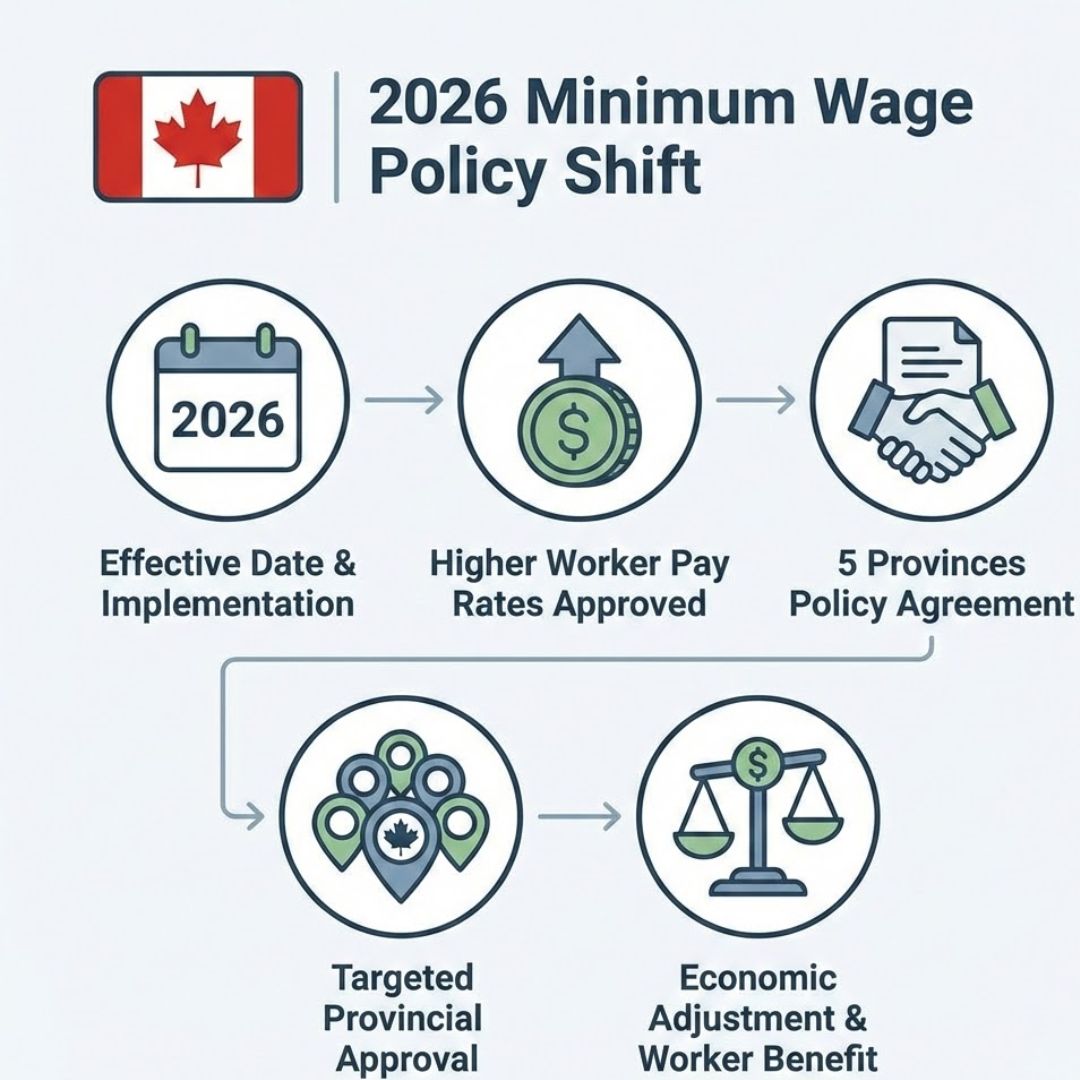
Minimum Wage Increases Coming in 2026 Workers in federally regulated industries will see higher minimum wages in early 2026. Employees in Nova Scotia, Prince Edward Island New Brunswick, Newfoundland and Labrador, and Yukon will also receive wage increases during this period. Additional provinces are expected to raise their minimum wages later in the year. Ontario, British Columbia, Quebec Manitoba and Saskatchewan will likely announce their increases as 2026 progresses. These changes will affect workers across multiple sectors and regions throughout Canada. The timing varies by jurisdiction but most increases should take effect before the end of 2026.
 Goodbye to CPP Old Rates: Monthly pensions rise to $1,760 as Canada resets payments January 9
