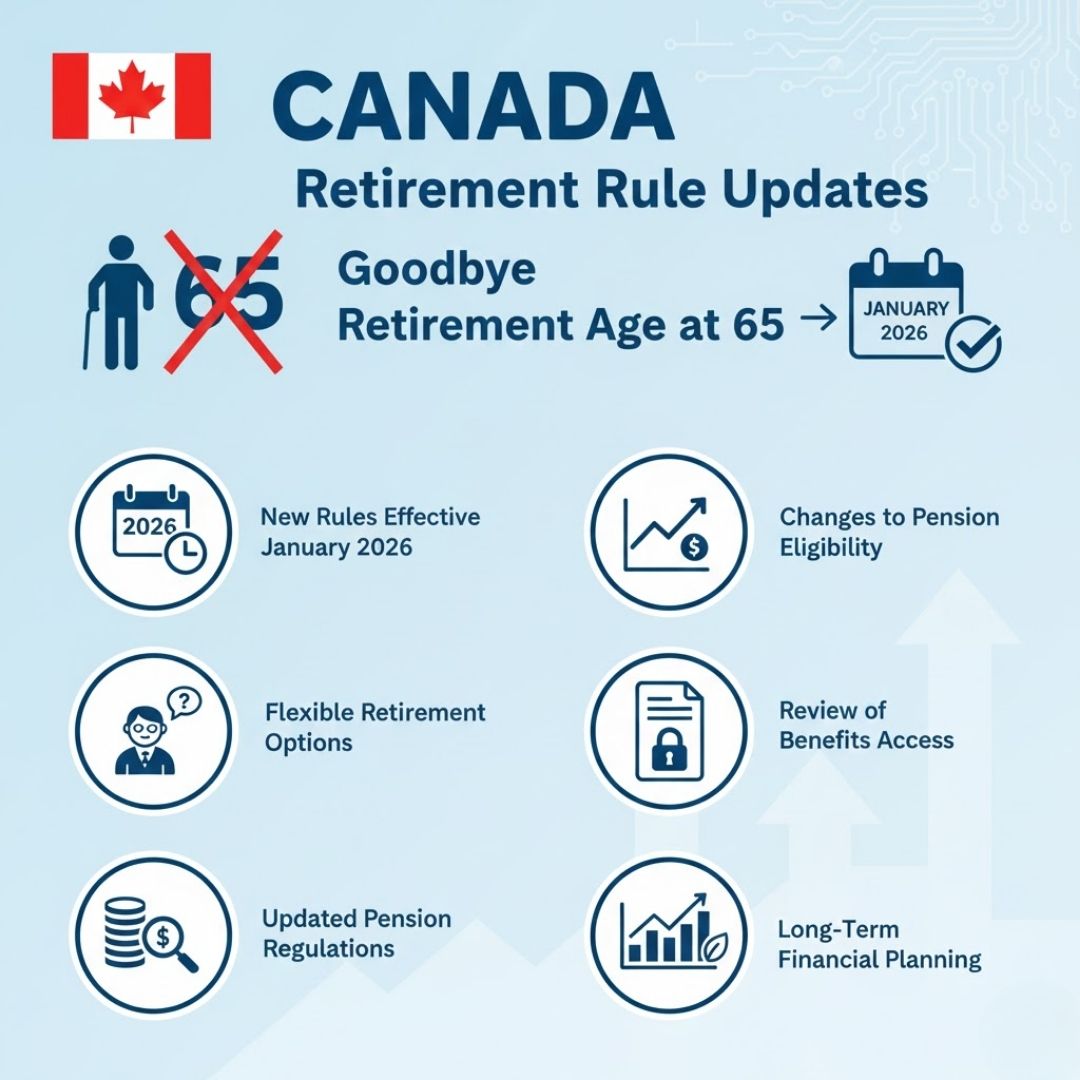
In a major policy shift, the Government of Canada has removed the long-standing fixed retirement age of 65, reshaping how Canadians approach work and retirement. Starting January 2026, individuals will be free to decide when to retire based on their personal health, financial readiness, and lifestyle goals rather than a legally implied age limit. This reform is designed to give older Canadians more flexibility, reduce age-based pressure in the workplace, and better reflect modern life expectancy and economic realities across the country.

A Major Turning Point in Canada’s Retirement Policy
For generations, age 65 was widely viewed as the standard retirement milestone in Canada, closely linked to federal programs such as Old Age Security (OAS) and the Canada Pension Plan (CPP). From 1 January 2026 onward, that expectation will no longer shape employment decisions. Canadians who are capable and willing to continue working beyond 65 will be able to do so without legal or institutional pressure. The reform applies equally across public and private sectors, ensuring consistent rules nationwide.
 Goodbye to CPP Old Rates: Monthly pensions rise to $1,760 as Canada resets payments January 9


Why the Fixed Retirement Age Was Removed
The decision reflects long-term shifts in Canada’s workforce and population. Life expectancy has increased significantly, making retirement at 65 less practical for many. From an economic standpoint, longer participation in the workforce helps stabilise pension systems and sustain tax revenues. Employers also benefit from retaining experienced professionals, particularly in sectors facing labour shortages. Most importantly, the reform recognises that people age differently and should have the freedom to choose when retirement makes sense for them.
What This Change Means for Employees
Ending mandatory retirement gives older workers greater control over their careers. Canadians can now remain employed beyond 65 without fear of forced exit, build higher lifetime earnings, and continue contributing to CPP for improved pension outcomes. Those who delay retirement may also choose to postpone benefit claims for larger monthly payments later. While concerns about age discrimination remain, existing human rights protections will continue to safeguard older employees from unfair treatment.
How Employers Will Need to Adapt
Employers across Canada will need to adjust workforce planning strategies as multigenerational teams become more common. This may include offering flexible schedules, part-time roles, or phased retirement options. Companies may also invest more in workplace health initiatives and ergonomic improvements to support older staff. Many organisations view this transition positively, as retaining skilled employees longer reduces hiring pressures and preserves valuable institutional knowledge.
Impact on Pensions and Government Benefits
CPP and OAS programs will remain in place, but the reform expands how Canadians can interact with them. Individuals who continue working can choose to delay benefit collection, potentially increasing monthly payouts. This flexibility supports more personalised retirement income planning, allowing people to align benefit timing with savings, employment income, and market conditions.

Retirement Timing and Benefit Comparison
| Retirement Option | Eligible Age | Effect on Monthly Benefits | Main Consideration |
|---|---|---|---|
| Early Retirement | 60 Years | Benefits reduced by up to 36% | Lower income over the long term |
| Standard Retirement | 65 Years | Standard benefit amount | Complete access to CPP and OAS |
| Delayed Retirement | 70 Years or Above | Benefits increased by up to 42% | Higher monthly pension payments |
Provincial Responses to the Reform
Although retirement policy is set at the federal level, provinces and territories must align workplace regulations accordingly. Regions such as Ontario, British Columbia, and Quebec have welcomed the reform, citing economic resilience and improved labour participation. Public-sector and regulated industries are expected to implement updated retirement policies early, setting the tone for broader adoption in 2026.
Public Opinion and Expert Perspectives
Many Canadians have responded positively, viewing the change as a progressive and inclusive update that reflects modern working lives. Economists suggest that longer workforce participation could support productivity and help offset demographic pressures from an ageing population. Some concerns remain around youth employment and healthcare costs, but most experts agree that offering choice rather than imposing rules is the defining strength of the reform.
Planning for Life and Work Beyond 65
As the new system approaches, Canadians are encouraged to review their retirement strategies regularly. Speaking with financial advisors can help optimise CPP and OAS timing, while discussing flexible or phased retirement options with employers may ease the transition. Updating savings plans, insurance coverage, and health goals will also be important, as longer careers place greater emphasis on long-term wellbeing and financial planning.